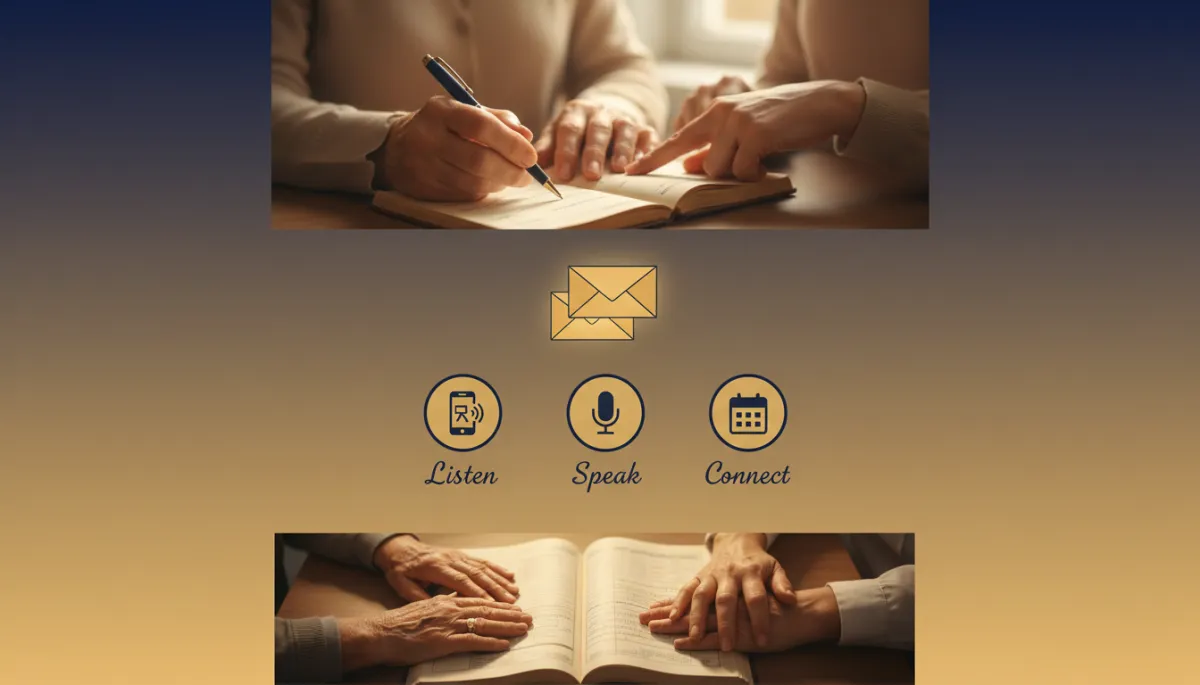
Being Helped vs Being Handled, What Carol's Story Teaches About Vision Loss and Independence
Vision Loss, Independence, Faith
Being Helped vs Being Handled: What Carol's Story Teaches About Vision Loss and Independence
When vision changes, life changes. But it should never quietly change who gets to decide. Carol’s story is a reminder that real help protects independence, while “handling” quietly replaces it, even when it comes from love and good intentions.
From Running the Household to Losing the Fine Print
Before her diagnosis, Carol ran her household finances like a small business. Spreadsheets. Paper statements filed by month. Every bill paid on the exact day it was due, never early, never late, because she liked seeing her own money move. Balancing her checkbook wasn’t just a task; it was proof that she was still fully in charge of her own life. And she was right to feel that way.
When Macular Degeneration Changed the Terms
Then came the diagnosis: macular degeneration, moving faster than her doctors expected. Within about a year, the fine print on a bank statement (the tiny numbers and terms she used to catch mistakes in at a glance) became something she simply could not read anymore. The capability changed. But her mind, her judgment, her desire to stay in charge? Those were still very much alive.
The Quiet Second Loss
The second loss didn’t come with a diagnosis code. It came quietly. Her son in law, trying to help, offered to start opening her mail and flagging anything important. Reasonable. Kind, even. At first, it was just an extra set of eyes. But over time, “I’ll flag anything important” slowly turned into him simply handling it, paying some bills himself, deciding what counted as important enough to mention, letting other things slide without a word.
Nobody sat Carol down and said, “We’re taking this away from you now.” Her role just quietly disappeared. The mail still came. The bills still existed. But the decisions were no longer hers in the same way. What she lost the second time wasn’t her sight, it was her say.

A stack of mail with one envelope gently highlighted, representing being asked rather than assumed
“I Didn’t Lose My Sight and My Mind on the Same Day”
Carol told me the hardest part wasn’t the vision loss itself. She had grieved that, worked through it, and found her footing. The hardest part was realizing that the people around her had quietly decided that losing her sight also meant losing her judgment. “I didn’t lose my sight and my mind on the same day,” she said. “But everybody started treating me like I did.”
If that lands anywhere in your own life, maybe not about vision, maybe about age, a diagnosis, or just being underestimated by someone who loves you, you already know how lonely that particular kind of “help” can feel. It’s not the lack of ability that hurts the most. It’s the quiet removal of trust.
The Late Fee That Wasn’t Really About the Late Fee
One month, a statement came in the mail. Her son in law set it on the counter, planning to mention it later. Life happened. A grandkid’s soccer game. Work. Errands. The envelope sat there, unopened, unmentioned. Ten days later, Carol got an automated call from the bank about a missed payment. Not from her son in law, from the bank.
The late fee itself, thirty-some dollars, wasn’t what broke her heart. What cut deep was the sentence he said over dinner when she brought it up gently: “Oh, sorry, I didn’t think it was that important.” A bill. On her account. With her name on it. Decided by someone else to be not important enough to mention.
Carol sat there, holding her fork, and for the first time in two years since her diagnosis, she didn’t just feel sadness about her vision. She felt something sharper, cleaner: anger about her independence.
The One Sentence That Changed Everything
She didn’t yell. She went quiet. She thought. And then she said one sentence that changed everything: “I need my bills back. Not because you did anything wrong on purpose, but because they’re mine, and I need to figure out how to manage them my own way, even if that way looks different now.”
That last part, even if that way looks different now, is the heart of it. Carol wasn’t asking to pretend nothing had changed. She knew her vision was different. What she wanted was the chance to build a new way of doing things that still honored her role as the decision-maker in her own life.
Vision Before Sight: The Framework Underneath Carol’s Story
This is one of the four frameworks I’ve built much of my work around: Vision Before Sight. It teaches that clarity of purpose will always matter more than clarity of circumstance. Losing a capability doesn’t mean losing the vision for your life. It means the vision needs a new set of tools to get there.
Carol’s new system isn’t flashy or complicated. It’s practical and deeply respectful:
A banking app with full screen reader support so she can hear every number herself.
Voice memos instead of sticky notes, so reminders live where her ears can reach them, not her eyes.
A standing Sunday call, her idea, where her daughter reads any paper mail out loud, together, so nothing gets quietly “handled” offstage again.

Three simple accessible tools, a screen reader app, voice memos, and a shared weekly call
In this system, Carol makes every decision. Her daughter is simply the voice reading the print, not the judgment behind it. That distinction matters more than almost anything else in this story.
The Difference Between Being Helped and Being Handled
Here’s the clearest way I know to say it: being helped and being handled are not the same thing.
Help asks. It checks in. It says, “What would make this easier for you?” It keeps the person with the diagnosis at the center of their own life.
Handling assumes. It decides quietly. It moves decisions off someone’s plate without asking. It may come from love, but it still takes away voice and choice.
💡 Key Distinction: The tools can change when circumstances change. The person who decides should not quietly change along with them.
How Families Can Support a Loved One with Vision Loss, Without Taking Over
If you love someone with vision loss, you may feel the pull to “just take care of it” so they don’t have to worry. The heart behind that is good. The impact, if you’re not careful, can be quietly crushing. Here are gentler, more honoring ways to help:
Ask before you act. Try, “Would you like me to read this with you, or would you rather handle it with a different tool?”
Build systems with them, not around them. Sit down together and design a process that keeps them in the decision seat.
Keep information flowing. Don’t filter what you think is “too much” or “not important.” Let them decide what matters.
Check your language. Swap “I’ll just do it” for “How can I support you in doing this your way?”
Tools That Help Someone with Vision Loss Manage Money Independently
Independence doesn’t mean doing everything alone. It means having the right tools and support so your decisions still lead the way. For finances, that might look like:
Accessible banking apps with strong screen reader support and large-print or high-contrast settings.
Voice memos to record due dates, confirmation numbers, and reminders instead of relying on paper notes.
A weekly “mail call” where a trusted person reads statements and letters aloud, while the person with vision loss stays fully in charge of the decisions.
Automatic payments for fixed bills, set up together, so nothing slips through the cracks while control remains transparent.
My Own Version of This Story
I’ve lived a version of this too. I have progressive vision loss myself, and I remember the exact moment someone I love very much tried to take over paying a bill for me “just to make it easier.” It absolutely came from love. And it still stung in a place I wasn’t expecting.
I told them what Carol eventually told her son in law, almost word for word: “I need this to still be mine, even if the way I do it looks different now.” That’s the whole ask. Not “don’t help.” Just, don’t decide for me that I can’t.
A Question to Sit With This Week
Where has someone, even with good intentions, taken something from you instead of building something with you? And on the other side of it, is there someone in your own life you might be quietly “handling” instead of helping?
What’s one piece of your independence, or someone else’s, that’s ready to be handed back this week, with a new tool if the old way doesn’t work anymore, but still fully theirs to decide?
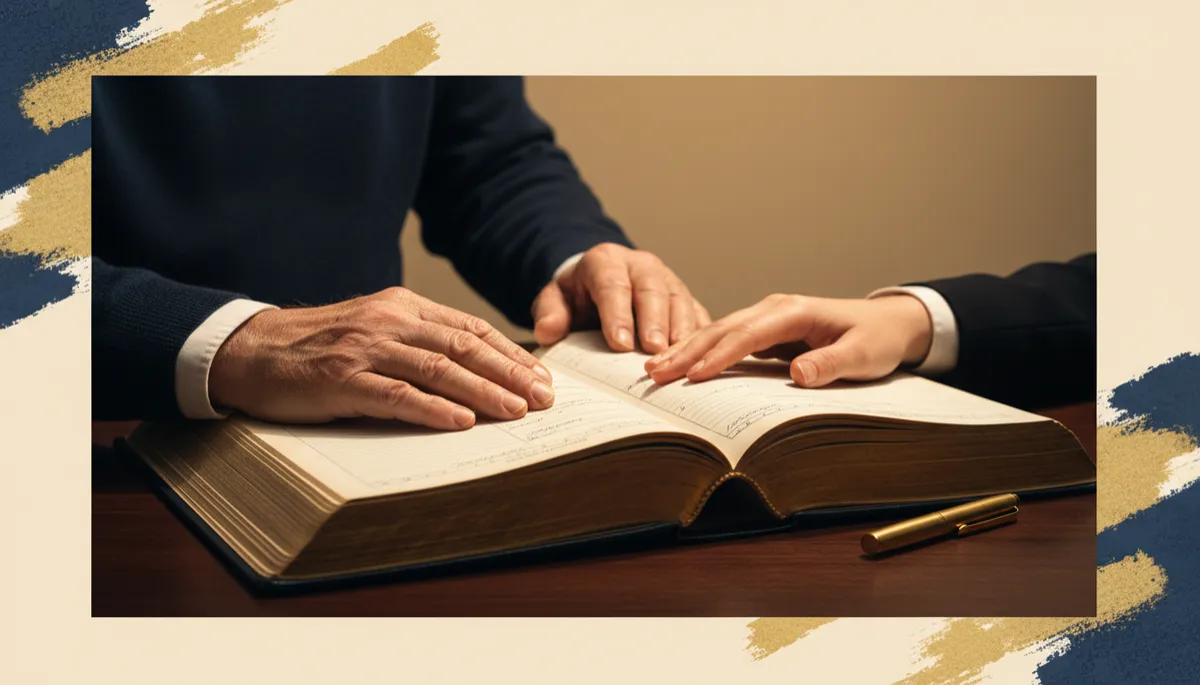
Two hands resting together on the same open ledger, help without takeover
Anchor God always. Tell God. Bring the sting, the anger, the grief, and the hope to the One who sees you clearly, even when your own eyes cannot see what they used to.
“Let your speech always be with grace, seasoned, as it were, with salt, so that you will know how you should respond to each person.” Colossians 4:6 (NASB)
Frequently Asked Questions
What is the “Vision Before Sight” framework?
Vision Before Sight teaches that clarity of purpose matters more than clarity of circumstance. Losing a capability, like reading fine print, doesn’t mean losing your vision for your life. It simply means finding new tools and supports to keep moving toward what matters most to you.
What’s the difference between being helped and being handled?
Being helped means someone asks first, listens, and keeps you at the center of your own decisions. Being handled means someone quietly assumes control, filters information, or takes tasks away without asking, even when they love you. Help protects your independence; handling slowly erases it.
How can families support a loved one with vision loss without taking over their life?
Build systems with them, not around them. Ask what kind of help feels respectful. Offer to read mail aloud, set up accessible apps, or create a weekly check-in—but keep them as the ultimate decision-maker. Check in often: “Is this still working for you?” “Do you want to change anything?”
What tools help someone with vision loss manage their own finances independently?
Screen reader–compatible banking apps, large-print or high-contrast settings, voice memos for reminders and confirmation numbers, and a regular time when mail is read aloud together can all help. Automatic payments and alerts, set up transparently, can add another layer of support while keeping the person fully informed and in charge.
Is this story only relevant to vision loss?
No. The pattern shows up around aging, chronic illness, disability, and any situation where someone quietly decides you “can’t handle” something anymore. Carol’s story is about vision loss, but the deeper message is about honoring a person’s God-given dignity, agency, and voice—no matter what changes in their circumstances.